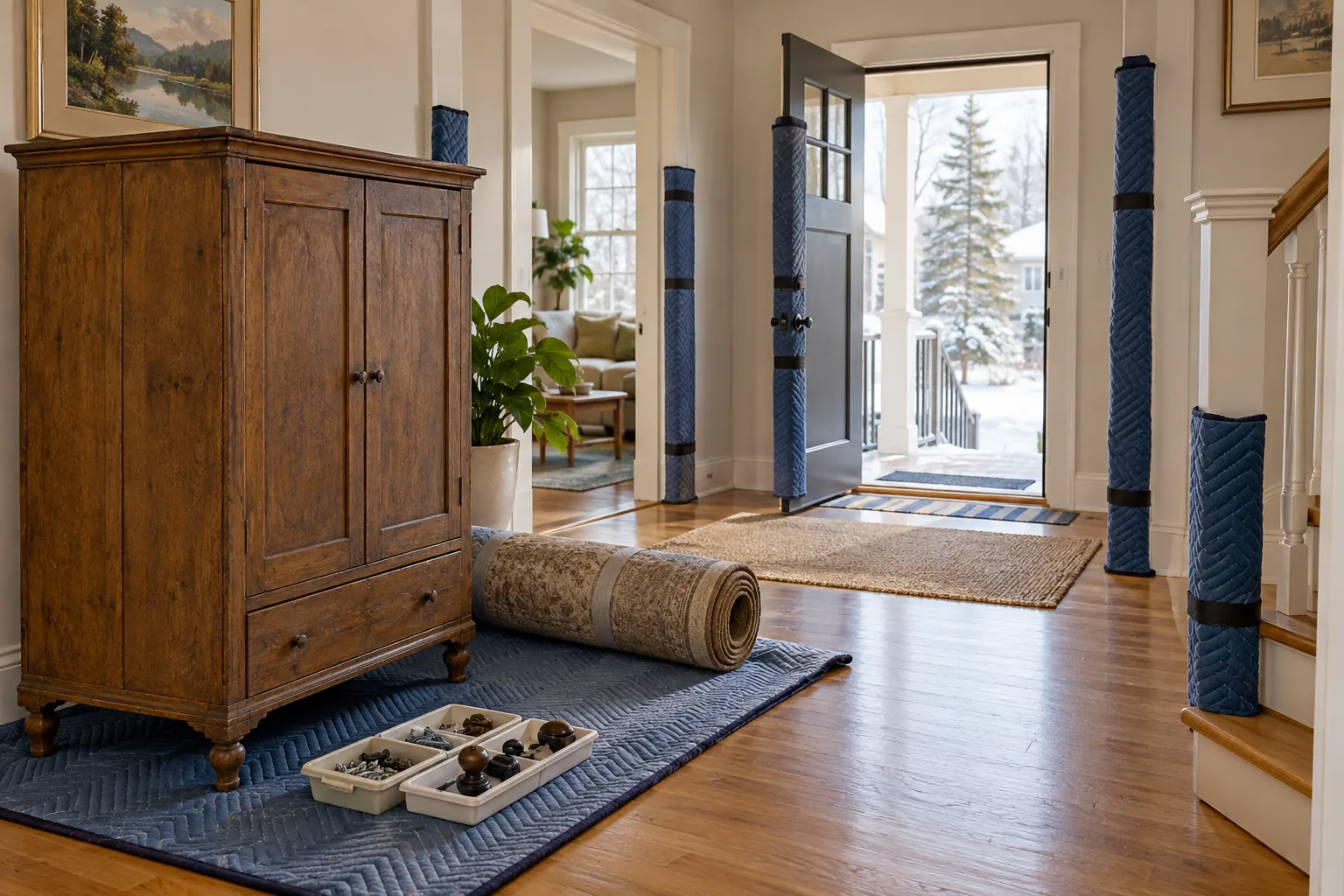
First storage and fitted additions should remove daily friction while leaving routes and household controls available.
Set the stage and the boundary
Begin with the possessions and activities that need a new place. Wall shelving installation can serve books, a mudroom bench can organise arrival and a new bike rack can free a defined garage footprint. These are first fittings, not contents clearance. If the home is full of unwanted possessions, Removing should own their take-away before the new layout is finalised. Keep unresolved belongings outside any discard instruction.
Resolve the practical dependencies
Choose the storage around real use. Record shelf loads, coat lengths, bike weights and the reach of the people using them. Open doors and drawers on the plan and allow for the garage door and parked vehicles. E-bikes and overhead systems can need different handling and supports from lightweight display storage. Describe the selected products and expected contents so the fixing proposal is based on the actual task.
Plan the work and the handoff
Assess support and interfaces before drilling. Suitable backing, concealed services and the product’s anchoring instructions belong in the brief. Tall units need anti-tip provisions where specified, while a ceiling rack needs an appropriate structural review. Include scribing, trim and finish repair separately. Preserve access to equipment, drains and service controls; spare wall area should not be assumed available when it performs another household function.
Make the next step concrete
At completion, review stability, drawer movement and practical loading. Retain product load guidance and adjustment instructions. Maintaining can care for the items that stay; Replacing can renew damaged systems later; Upgrading owns a broader change in how a room performs. A focused HAUSE enquiry with the inventory, room photographs and first-fitting objectives can make the layout proposal much more useful.
A practical sequencing example
Try the proposed storage with a few representative items on the drawing before purchase. A deep shelf that hides small objects or a bike rack beyond comfortable reach may not serve the intended user. The goal is useful organisation through the chosen first fittings, with clear limits rather than a promise that storage alone resolves every household habit.
- Possessions and first fittings separated
- Expected loads and user reach described
- Doors, vehicles and routes reviewed
- Backing and concealed services assessed
- Load limits and adjustments handed over