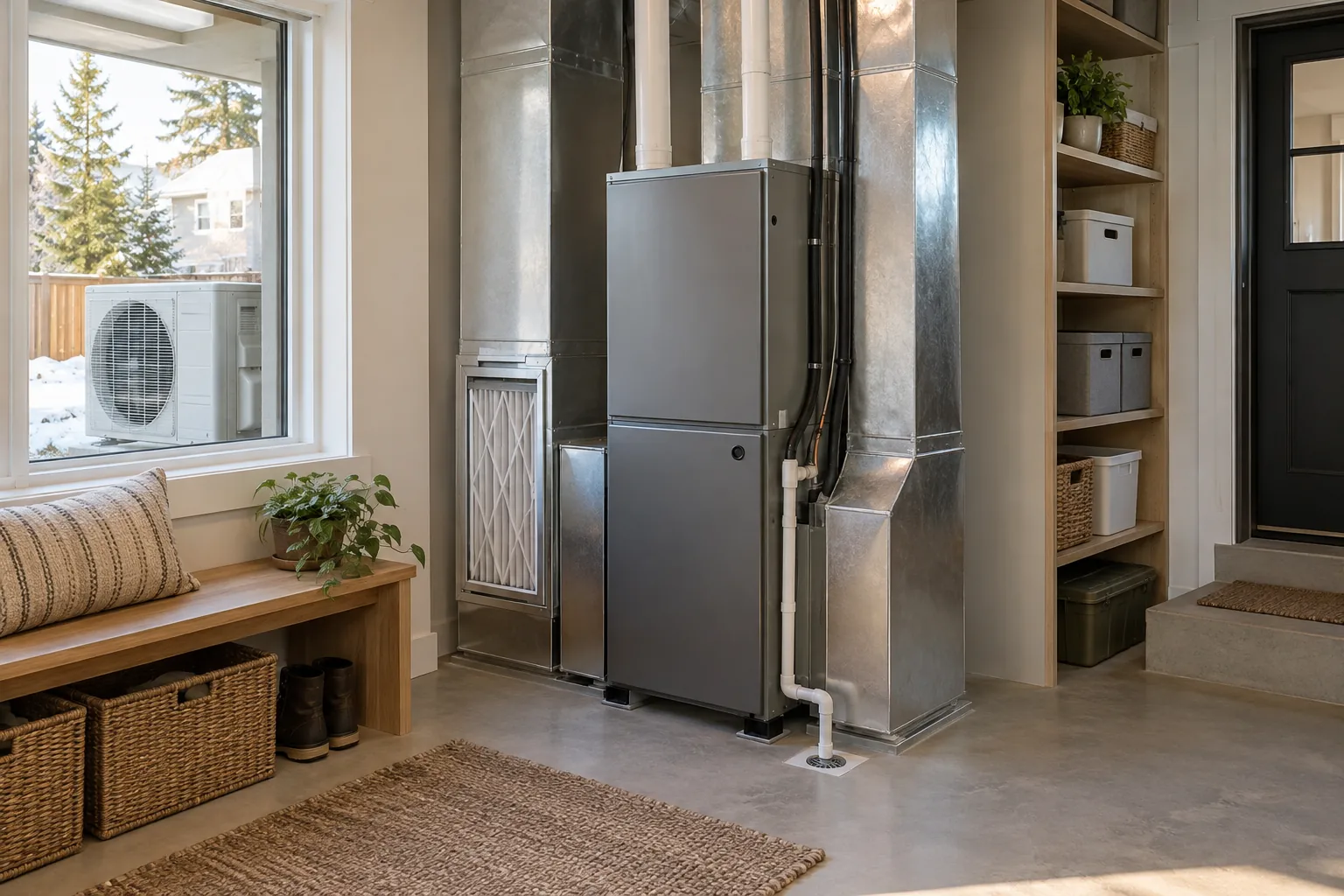
First carbon monoxide coverage should be planned for the actual dwelling and relevant household needs.
Resolve the important fit decisions
Review fuel-burning equipment, attached-garage conditions and existing alarm coverage with the relevant professional or fire authority. Select certified Canadian-use products. Ask for the proposed arrangement to be described before products, dates or connected work are committed. Photographs help establish the brief; concealed conditions may still need a visit.
Coordinate the surrounding work
Coordinate power and any compatible interconnection through suitable providers. Smoke-only alarms do not perform the carbon monoxide function. Record what the quoted work assumes about the room and identify who will address a condition that falls outside those assumptions. That keeps the next step practical and comparable.
Define a useful finished result
Agree manufacturer-directed testing, device records and explanation of the alarm’s documented response guidance. Send HAUSE the relevant measurements, accessible photographs and your preferred outcome. A focused enquiry gives the provider a better starting point for confirming scope, suitability and availability.
What shapes the scope?
- Coverage and product selection
- Power and interconnection
- Wiring and access
- Testing and household instruction
What should be checked?
- Devices identified
- Test demonstrated
- Instructions retained
Questions worth asking
Does a smoke alarm already cover carbon monoxide?
Only a product explicitly providing both functions does so. Confirm documented capabilities.
Does fitting authorise continued use of faulty equipment?
No. An alarm is not a correction for a combustion or ventilation problem.
Bring the details together.
Add this service to My project. Tell HAUSE what you have, what you want to achieve and where the work is needed. A clearer brief makes it easier to discuss the right assessment, responsible trades and written scope.
Build my project brief ↗