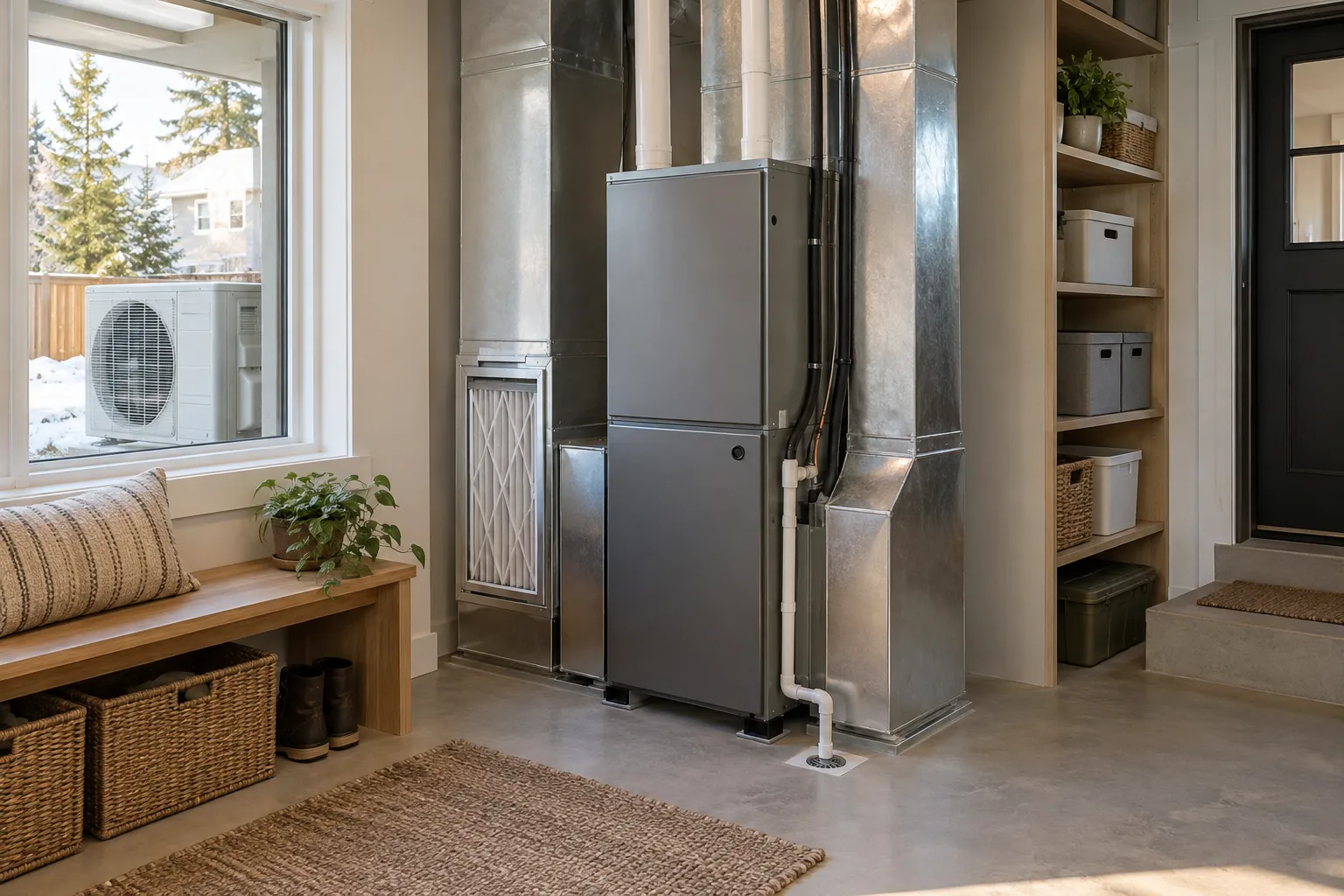
A first air-treatment device should address a stated objective without replacing control of the pollutant source.
Resolve the important fit decisions
Identify the concern and compare the product’s documented capabilities. A portable unit and a central system have different placement, airflow and service needs. Ask for the proposed arrangement to be described before products, dates or connected work are committed. Photographs help establish the brief; concealed conditions may still need a visit.
Coordinate the surrounding work
Review the space or existing heating system, power and filter access. Avoid treating a device’s broad marketing language as a site-specific health result. Record what the quoted work assumes about the room and identify who will address a condition that falls outside those assumptions. That keeps the next step practical and comparable.
Define a useful finished result
Agree operation, owner controls and the exact consumable information required for future care. Send HAUSE the relevant measurements, accessible photographs and your preferred outcome. A focused enquiry gives the provider a better starting point for confirming scope, suitability and availability.
What shapes the scope?
- Treatment goal and product
- Room or duct arrangement
- Power and mounting
- Filter access and consumables
What should be checked?
- Product identity recorded
- Controls demonstrated
- Care access checked
Questions worth asking
Does an air purifier remove the cause of mould?
No. Health Canada advises addressing moisture sources; an air-treatment device does not correct a leak or damp assembly.
Will a filter that fits the duct always be suitable?
The system’s airflow and equipment requirements need review, not just its physical dimensions.
Bring the details together.
Add this service to My project. Tell HAUSE what you have, what you want to achieve and where the work is needed. A clearer brief makes it easier to discuss the right assessment, responsible trades and written scope.
Build my project brief ↗