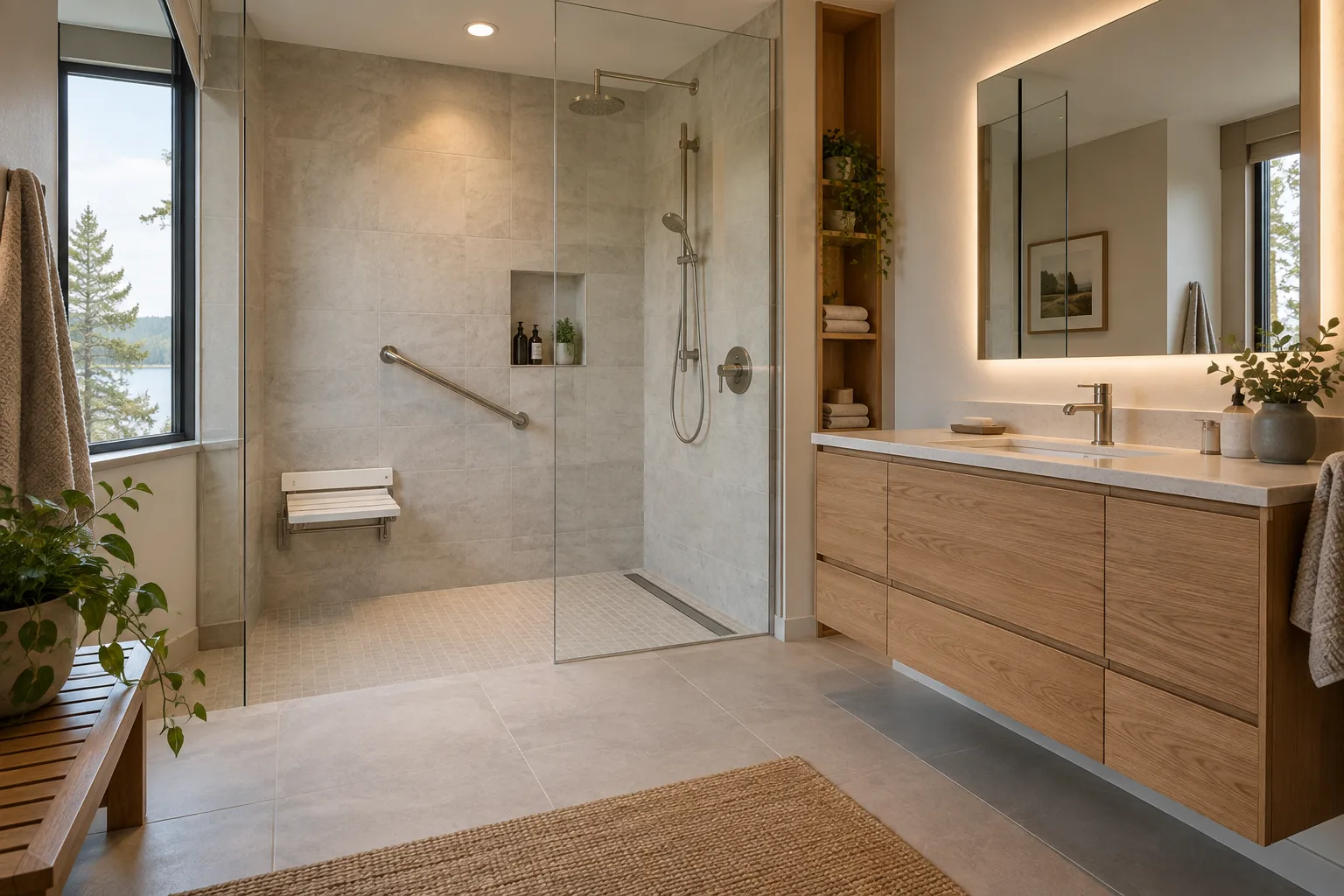
Add first support fittings around the person’s actual bathroom tasks rather than a generic accessory layout.
Resolve the important fit decisions
Identify the specific support products and any occupational-therapy or other relevant recommendations. Review reach, transfer space and the way the room is used. Ask for the proposed arrangement to be described before products, dates or connected work are committed. Photographs help establish the brief; concealed conditions may still need a visit.
Coordinate the surrounding work
Assess backing and product-compatible waterproofing details before finishes are penetrated. Coordinate fixtures and doors so the support is usable without creating another obstacle. Record what the quoted work assumes about the room and identify who will address a condition that falls outside those assumptions. That keeps the next step practical and comparable.
Define a useful finished result
Agree placement review, secure support and retention of product limitations. Send HAUSE the relevant measurements, accessible photographs and your preferred outcome. A focused enquiry gives the provider a better starting point for confirming scope, suitability and availability.
What shapes the scope?
- Product and quantity
- Individual placement review
- Backing and reinforcement
- Wet-area finish details
What should be checked?
- Positions reviewed
- Support confirmed
- Product guidance retained
Questions worth asking
Are these the same as ordinary bathroom accessories?
No. Support equipment needs suitable product selection and anchoring for its intended role.
Can placement be based on a photograph alone?
A photograph helps the brief, but individual use and concealed support may require an in-person assessment.
Bring the details together.
Add this service to My project. Tell HAUSE what you have, what you want to achieve and where the work is needed. A clearer brief makes it easier to discuss the right assessment, responsible trades and written scope.
Build my project brief ↗