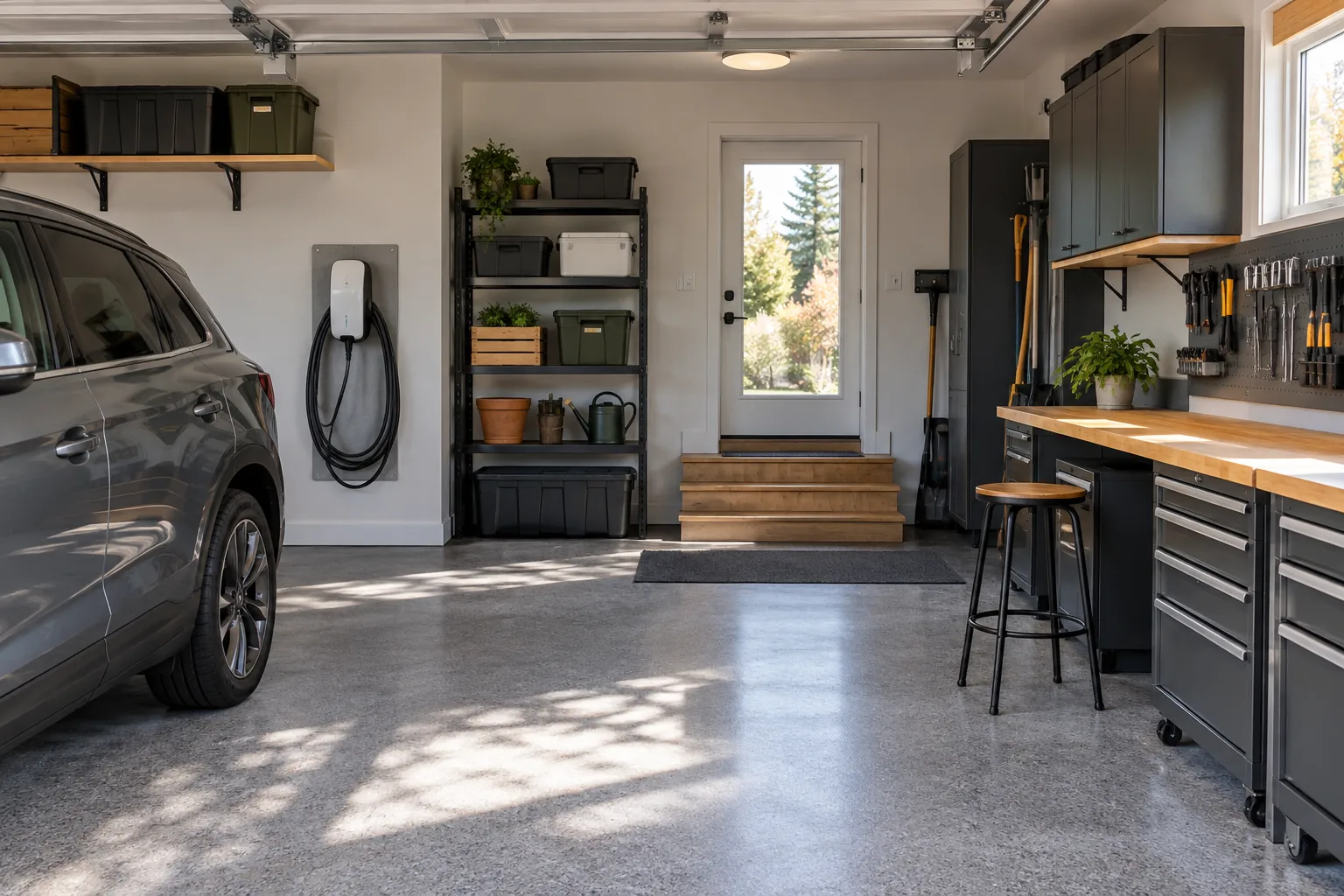
A first garage heater should suit the room’s use, heat requirement and the materials or activities around it.
Resolve the important fit decisions
Review garage size, insulation, intended temperatures and occupancy. Disclose woodworking, fuels or other activities that affect equipment suitability. Ask for the proposed arrangement to be described before products, dates or connected work are committed. Photographs help establish the brief; concealed conditions may still need a visit.
Coordinate the surrounding work
Have appropriate professionals assess fuel or electrical supply, venting where applicable, mounting and clearances. Separate heating from ventilation needs. Record what the quoted work assumes about the room and identify who will address a condition that falls outside those assumptions. That keeps the next step practical and comparable.
Define a useful finished result
Agree commissioning, controls and product-specific use and service information. Send HAUSE the relevant measurements, accessible photographs and your preferred outcome. A focused enquiry gives the provider a better starting point for confirming scope, suitability and availability.
What shapes the scope?
- Heating need and equipment
- Fuel or electrical capacity
- Venting and support
- Controls and clearances
What should be checked?
- Connections checked
- Controls demonstrated
- Use restrictions retained
Questions worth asking
Does a heater make vehicle idling safe?
No. Do not idle vehicles in a garage; heating is not a carbon monoxide protection strategy.
Can any portable heater become a permanent installation?
Use equipment approved and assessed for the intended installed arrangement.
Bring the details together.
Add this service to My project. Tell HAUSE what you have, what you want to achieve and where the work is needed. A clearer brief makes it easier to discuss the right assessment, responsible trades and written scope.
Build my project brief ↗