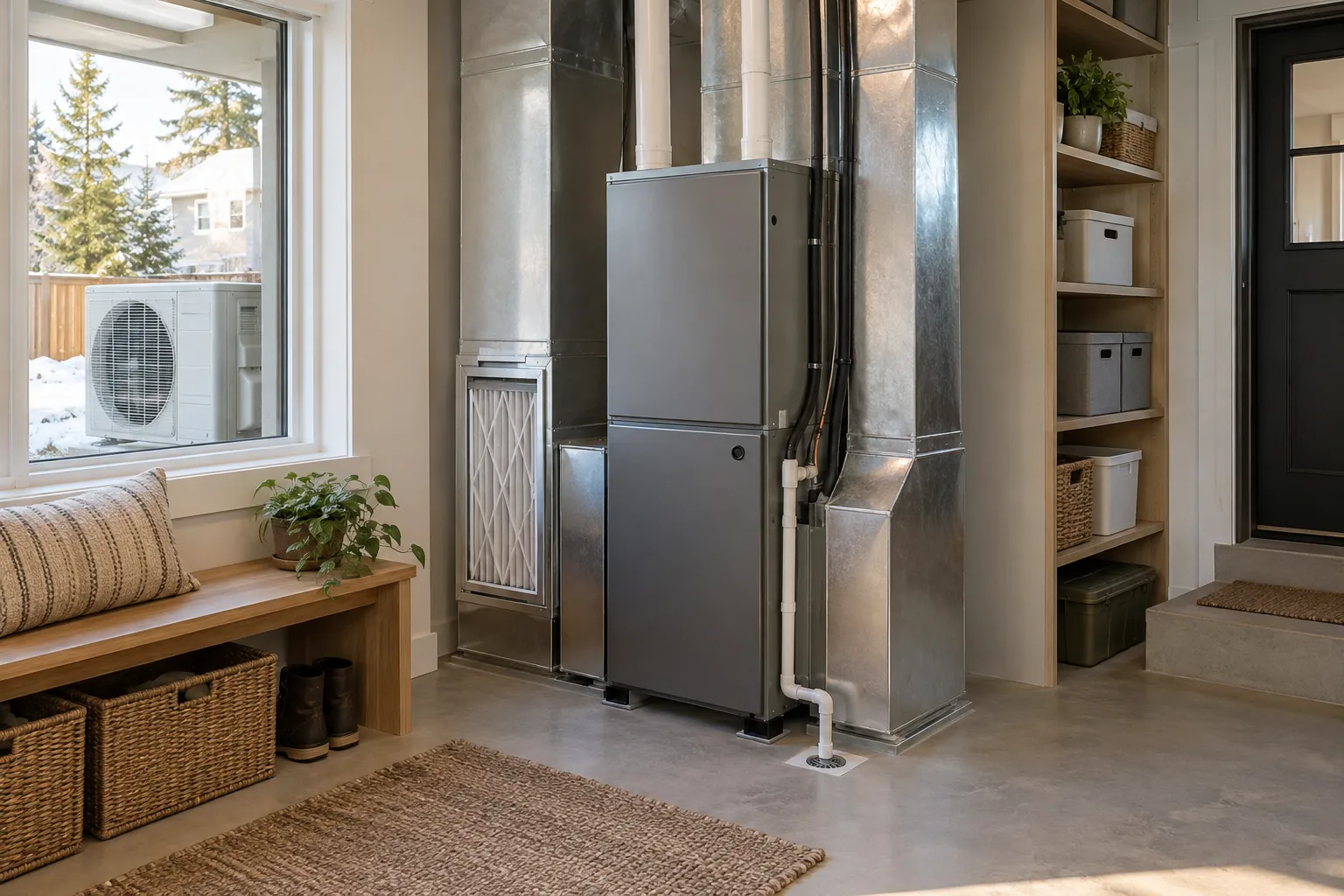
A first softener should answer an identified hardness concern and fit the household’s water use and service space.
Resolve the important fit decisions
Review water information, treatment objectives and the selected unit’s capacity. Softening is not the same as making an unsafe supply suitable to drink. Ask for the proposed arrangement to be described before products, dates or connected work are committed. Photographs help establish the brief; concealed conditions may still need a visit.
Coordinate the surrounding work
Coordinate inlet and outlet connections, bypass, drainage and access for salt or other consumables. Discuss any water uses intended to remain outside the softened supply. Record what the quoted work assumes about the room and identify who will address a condition that falls outside those assumptions. That keeps the next step practical and comparable.
Define a useful finished result
Agree connection checks, initial setup and the manual’s replenishment and care instructions. Send HAUSE the relevant measurements, accessible photographs and your preferred outcome. A focused enquiry gives the provider a better starting point for confirming scope, suitability and availability.
What shapes the scope?
- Water conditions and demand
- Unit and bypass arrangement
- Drain and pipe routes
- Consumable and service access
What should be checked?
- Connections checked
- Bypass explained
- Setup and care recorded
Questions worth asking
Will a softener remove every contaminant?
No. Treatment claims are specific; select equipment around the actual water concern and relevant certification.
Does the unit need a drain?
Confirm the exact system’s requirements, including regeneration discharge, with the responsible plumbing professional.
Bring the details together.
Add this service to My project. Tell HAUSE what you have, what you want to achieve and where the work is needed. A clearer brief makes it easier to discuss the right assessment, responsible trades and written scope.
Build my project brief ↗