First accessibility equipment should follow the individual’s needs and a review of the complete route or task.
Choose the arrangement around real use
Begin with the person, mobility equipment and any relevant assessment recommendations. A threshold aid, ramp, stair lift and transfer system address different barriers. Reach, manoeuvring space, transfer position and manual operation matter alongside dimensions. A standard mounting height or a product labelled accessible does not establish suitability for every user.
Coordinate support and connected work
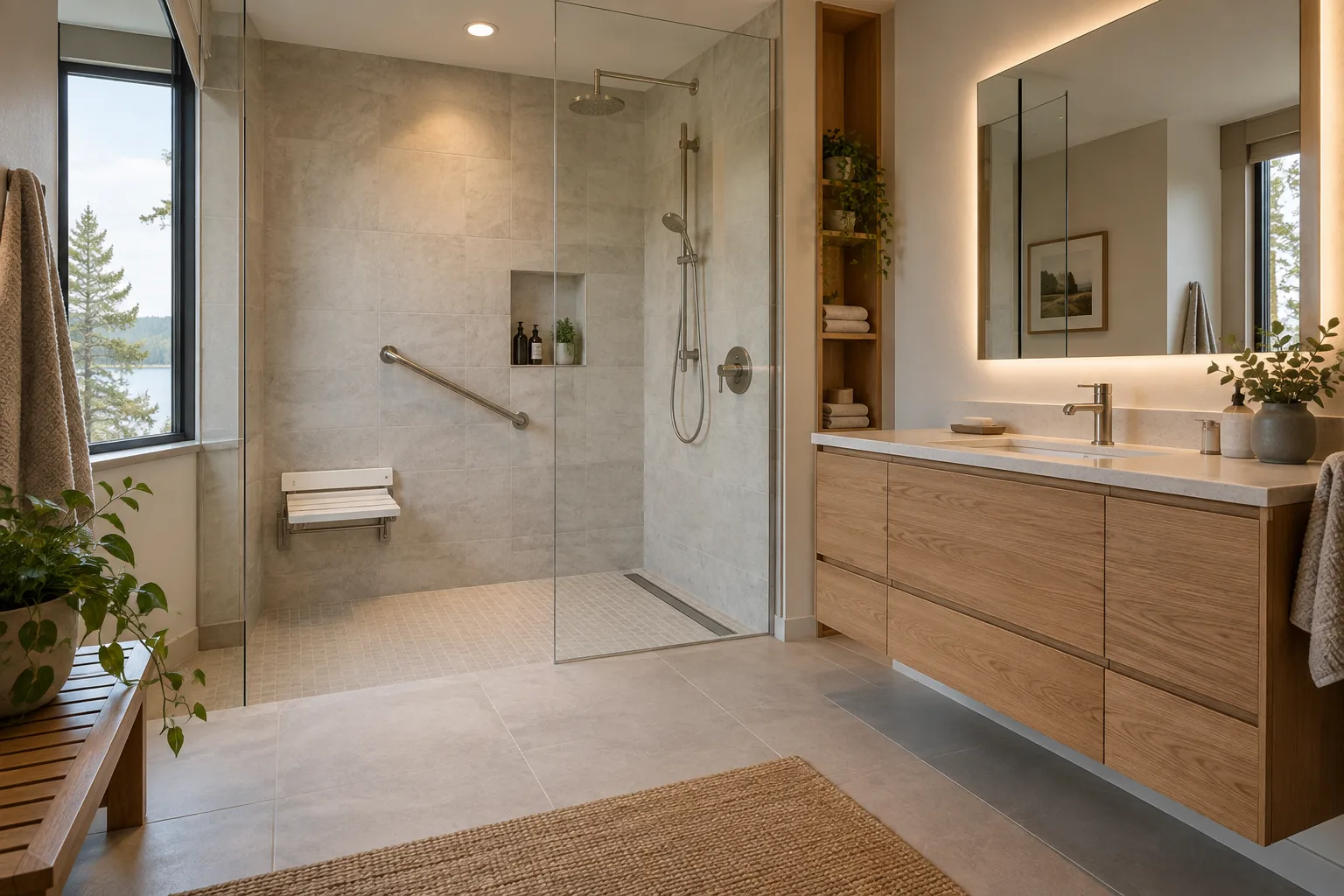
Coordinate the building and equipment. Support rails and seats need suitable backing; lifts need product-specific surveys and commissioning; powered door controls must work with the complete door assembly. Groundwork, electricity and wet-area details need their appropriate providers. Include how the installation affects other household members and any care-provider access rather than assessing the device in isolation.
Finish with a useful handover
Make the handover usable. Agree a practical demonstration with the intended user or authorised carer, retain product limits and document power-outage or manual behaviour where relevant. Installation does not substitute for clinical advice or certify the whole dwelling accessible. Use Maintaining for continuing care and Replacing for renewing the same equipment role when its service life ends.
Apply the brief to the actual home
Describe the activity that remains difficult, such as crossing a threshold or receiving a visitor signal. That gives the assessor a functional question instead of assuming a particular device is the only suitable answer.
Details to bring into the conversation
- Do not substitute decorative fittings for support devices
- Avoid generic placements without individual review
- Do not claim whole-home accessibility from one fitting