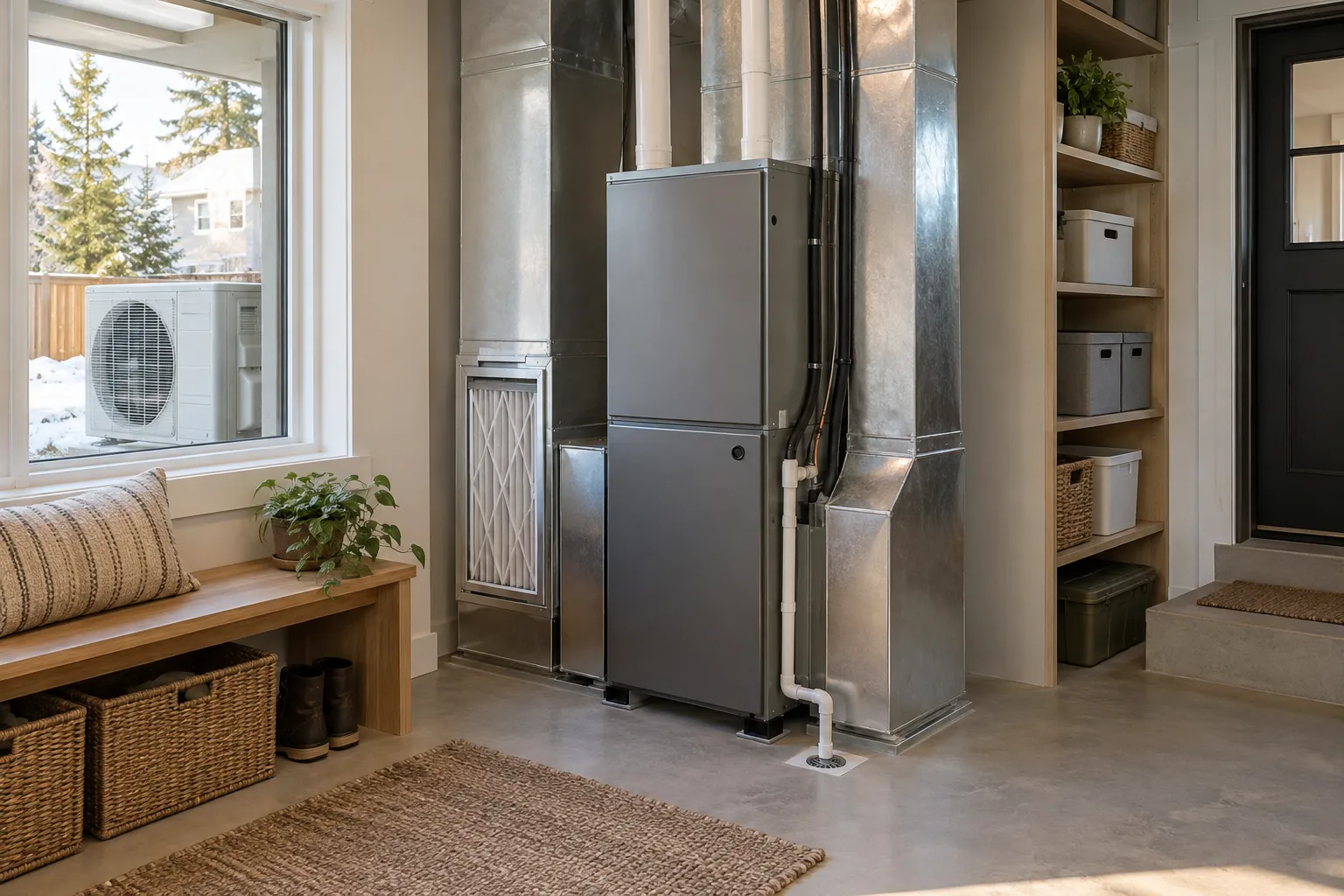
A first utility or comfort system should answer a defined household need through a compatible whole-home arrangement.
Choose the arrangement around real use
State the objective before selecting equipment: hardness treatment, a drinking-water concern, ventilation, humidity control or a particular heating need. These are different decisions. Water-treatment claims should match the actual concern and certification. Heat-pump selection should use an appropriate load and distribution assessment, not only the home’s floor area or an advertised efficiency figure.
Coordinate support and connected work
Review the connections and operating environment. Drainage, bypasses, air routes, power, fuel, controls and service access can determine whether a compact product fits the home. An HRV is a balanced ventilation system, not a single exhaust fan. A dehumidifier does not correct a foundation leak, and a backup pump does not establish that the entire drainage system is sound.
Finish with a useful handover
Ask for useful commissioning and records. The proposal should state the selected models, setup and testing responsibilities, limitations and what the household should maintain. Keep consumable details and accessible control information. If the project deliberately improves an existing system’s capability, Upgrading owns that broader outcome; Installing supplies first provisions without duplicating the same project under another name.
Apply the brief to the actual home
A useful equipment record also states which concern the system was selected to address. That helps later care distinguish a normal consumable task from a changing condition that needs reassessment.
Details to bring into the conversation
- Do not promise unverified savings or rebates
- Separate moisture causes from treatment equipment
- Retain service and consumable access